Friday, November 2, 2012

Final Harvest!

Green tomato

Some areas of the region may see the first frost of the season tonight, and for others it will not be far behind. The average first fall frost usually occurs the first week of November in  Burgaw and inland areas including Wallace, Currie, and Shallotte. Coastal communities (Hampstead, Wilmington, Southport) still have a few weeks - the first frost along the coast most often occurs during the third week of November due to the moderating effect of ocean waters.

If frost is predicted for your community, make a final harvest of tomatoes, peppers, cucumbers, squash, eggplant, beans, field peas, okra, and sweet potatoes before freezing temperatures damages or kills plants and fruits. 

To make the most of this late season bounty, store crops under proper conditions. Most summer crops store best at 55 degrees in perforated plastic bags and will last up to a week under these conditions (peppers will last longer). Storing near apples and tomatoes (which release ethylene) will reduce shelf life.

Green tomatoes, harvested before frost, can be wrapped in newspaper and kept at 55 F to 70 F. Tomatoes stored in this manner should last 3-5 weeks. Be sure to inspect each week for ripeness.

Following harvest, sweet potatoes should be ‘cured’ by placing them in a moist, warm (80-85 degrees) location for a week to 10 days. Once cured, store them for winter in a dark, cool location (55 degrees) where they will not freeze.

Learn more!

What Can I Do About Kudzu Bugs?

Kudzu Bugs
Kudzu bugs are a new pest in the south, making their debut in our area this past spring. After spending the summer outdoors feeding on kudzu, soybeans, field peas and other members of the bean family, these prolific insects are now looking for a cozy place to spend the winter. This could be nestled under tree bark, tucked into mulch or leaf litter, or dry and warm inside your house. Western areas of the state are already reporting a wave of home invasions by this pest, which is moving our way as cooler temperatures drive these bugs out of the fields and potentially into our homes.

When kudzu bugs do enter your home, your best defense is a vacuum cleaner. Simply vacuum the bugs up, being careful not to crush them. As members of the stink bug family, kudzu bugs have an unpleasant odor when crushed and can leave behind a stain. Spraying pesticides indoors is not recommended, while spraying outdoors will likely have little effect on kudzu bug numbers. To learn more about managing kudzu bugs, read the whole article posted on the Pender Cooperative Extension website: http://pender.ces.ncsu.edu/2012/11/what-can-i-do-about-kudzu-bugs/

Wednesday, October 31, 2012

Aphid Mummies Haunting Vegetable Gardens!

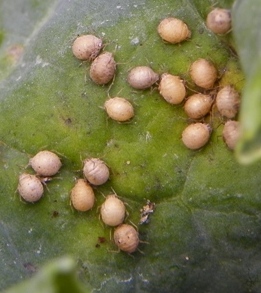
Aphid Mummies
Aphids are a common pest on many fall crops including broccoli, kale, collards, turnips, and lettuce. They can often be found on the backside of crop leaves where they feed on plant sap. 

As you are harvesting your crop keep a look out for these pests, but also pay close attention to their appearance - some may actually be aphid mummies. These are the bodies of aphids that have been parasitized by a species of very small wasp that does not sting people. Normal aphids will be green and living; aphid mummies are tan, appear puffed up, and are hollow. 

Aphid mummies are a good sign that mother nature is helping defend your garden! Learn more about aphids and how to control them in vegetable crops from this article posted on the Pender Cooperative Extension website: http://pender.ces.ncsu.edu/2012/10/how-to-control-aphids-on-vegetable-crops/

Friday, October 26, 2012

Too Much Mulch Will Harm Plants

Volcano mulch!
Are you your landscapes worst enemy? Is your motto, “If a little is good, a lot is better”? 

If so you may be killing your plants with kindness, especially when it comes to mulch. While all plants grow better with mulch, too much can kill them. The secret to nurturing a healthy landscape is to know when enough is enough.

Two to four inches of mulch is ideal for landscape beds. Deeper layers can cause problems, especially when piled against the trunks of trees. Known as volcano mulching, this practice can slowly kill trees and shrubs. 

To learn more about mulch related problems and the right way to mulch, read the whole article on the Pender Cooperative Extension website: http://pender.ces.ncsu.edu/2012/10/can-too-much-mulch-killl-plants/

Thursday, October 18, 2012

Fall Lawn Care Tips and Tasks

Florida betony
Lawns in southeastern North Carolina are suited to warm season turf grasses such as St. Augustine, zoysia, bermuda and centipede. Caring for warm season turf grasses is very different from caring for turf grasses grown in cooler climates. As warm season lawns get ready to transition into the dormant winter season, there are some important things that should be done, and others that should not be done, to keep lawns healthy.

This is not the time to fertilize or water your lawn. Instead you should be focusing on weed control, if it is needed. Two of our most troublesome cool season perennial weeds are wild garlic and Florida betony. Both are currently sprouting in yards throughout SE NC. While herbicide application will not kill these weeds, treating them now is much more effective than waiting until spring. To find out which herbicides can be used to control these and other winter weeds, visit the Pender Cooperative Extension website to read the whole article: http://pender.ces.ncsu.edu/2012/10/fall-lawn-care-tips-and-tasks/ 

Friday, October 12, 2012

Plant Flowers and Veggies for Winter Color!

'Redbor' Kale with yellow violas
You will find more than just pansies awaiting your landscape at garden centers this autumn! As the exciting trend of cool season gardening grows, more and more winter hardy annuals are making their way into local nurseries. Winter hardy annuals are plants like pansies that are planted in fall to grow during the cool part of the year, providing color through the winter and early spring. Many of these plants are both ornamental and edible and can be planted in landscapes as well as gardens.

Find out what you can plant now for color in your landscape and garden all winter! Read the whole article posted on the Pender Cooperative Extension website: http://pender.ces.ncsu.edu/2012/10/plant-flowers-and-veggies-for-winter-color/

Monday, October 8, 2012

How Soil Testing Can Help You

Chlorosis can be caused by a soil pH or nutrient problem.
Heavy rains this summer have removed many nutrients from soils in southeastern NC. Symptoms of nutrient deficiency include stunted growth, yellow or purple leaves, excessive shedding of older leaves, reduced flowering, and poor flavor in vegetables. If you have observed any of these symptoms on plants in your yard soil testing can help you get to the root of the problem and tell you how to fix it.

Soil samples can be submitted for testing any time of the year. Collecting soil samples only takes a few minutes, can help you save money in your lawn, garden and landscape, and can result in healthier plants by telling you which nutrients are already in your soil and which ones you need to add. If nutrients are needed, they can be supplied with either natural or synthetic fertilizers.

Boxes and forms for sampling are available from any Cooperative Extension office. Completed samples should be dropped off at your local Extension office to be sent to the N.C. Department of Agriculture’s soil testing lab in Raleigh, at no expense to you. 

Learn more about what soil testing can tell you about your soil and how to take soil samples - Read the whole article on the Pender Cooperative Extension website: http://pender.ces.ncsu.edu/2012/10/how-soil-testing-can-help-you/