Showing posts with label fertilizer. Show all posts

Friday, May 3, 2013

Which Fertilizer Is Best?

Slow release fertilizers are better for sandy soils.
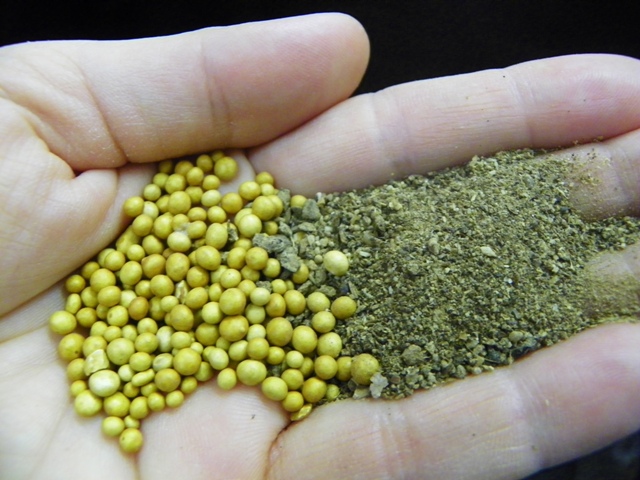
These include synthetic, time release products (left) and organic fertilizers (right).
There are lots of choices when it comes to fertilizing plants. Garden center shelves are lined with products that promise beautiful, healthy, lush plant growth. Some are added to the soil as a pellet or granule, while others are mixed with water and applied as a liquid. Which is best for your yard or garden depends on the type of nutrients your plants need and how quickly they need them.

To learn more about determining your plants' fertilizer needs and the types of fertilizers you can use, read the whole article posted on the Pender Extension website: http://pender.ces.ncsu.edu/2013/05/which-fertilizer-is-best/

Monday, October 8, 2012

How Soil Testing Can Help You

Chlorosis can be caused by a soil pH or nutrient problem.
Heavy rains this summer have removed many nutrients from soils in southeastern NC. Symptoms of nutrient deficiency include stunted growth, yellow or purple leaves, excessive shedding of older leaves, reduced flowering, and poor flavor in vegetables. If you have observed any of these symptoms on plants in your yard soil testing can help you get to the root of the problem and tell you how to fix it.

Soil samples can be submitted for testing any time of the year. Collecting soil samples only takes a few minutes, can help you save money in your lawn, garden and landscape, and can result in healthier plants by telling you which nutrients are already in your soil and which ones you need to add. If nutrients are needed, they can be supplied with either natural or synthetic fertilizers.

Boxes and forms for sampling are available from any Cooperative Extension office. Completed samples should be dropped off at your local Extension office to be sent to the N.C. Department of Agriculture’s soil testing lab in Raleigh, at no expense to you. 

Learn more about what soil testing can tell you about your soil and how to take soil samples - Read the whole article on the Pender Cooperative Extension website: http://pender.ces.ncsu.edu/2012/10/how-soil-testing-can-help-you/